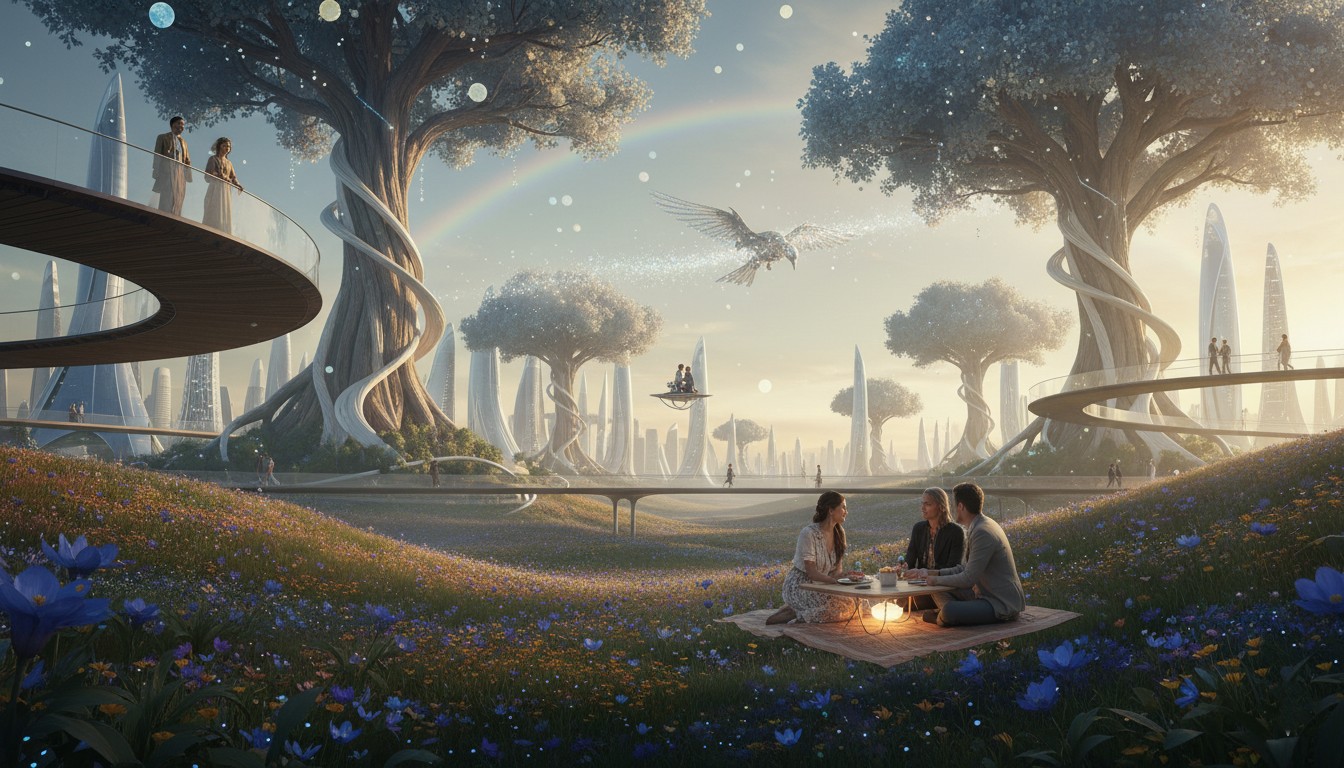
Magical Realism is a literary and artistic movement, predominantly Latin American and dating back to the mid-20th century, that combines everyday reality with fantastic or strange elements, presenting them as normal. Unlike fantasy, magic does not surprise the characters; it unfolds naturally.
In my novels, Arca of Itharion / Ascendemos, The Auroral Weaver / El Auroral Weaver, and even more so in the upcoming The Pulse of Angkor / El pulso de Angkor, I use magical realism to ground the impossible quantum mechanics of ancient empires into the dirt, sweat, and everyday reality of a family that decides not only their own future but the future of humanity.
Here are the details:
Main Characteristics:
The everyday is magical: Unreal or mythical elements are an integrated part of daily life without being questioned.
Impassive narrator: The narrator tells of fantastic events with a neutral tone, as if they were common occurrences.
Latin American context: It often reflects the reality, politics, history, and popular beliefs of Latin America.
Cyclical time: Time is often not linear but repeats or becomes distorted.
Fundamental Authors and Works:
Gabriel García Márquez: One Hundred Years of Solitude (the genre’s masterpiece).
Juan Rulfo: Pedro Páramo.
Isabel Allende: The House of the Spirits.
Miguel Ángel Asturias: Legends of Guatemala.
Alejo Carpentier: The Kingdom of This World.
The term was coined by critic Franz Roh in 1925 to describe a style of painting, but in its literary sense, it took root with the “Latin American Boom” of the 60s and 70s. However, the movement has not died with the masters of the past; today, new authors are taking it in new directions.
Andean Gothic and Contemporary Terror
This is a fascinating evolution. Here, the “magic” is not necessarily beautiful or marvellous, but rather disturbing and dark.
Mónica Ojeda (Ecuador): The greatest exponent of “Andean Gothic.” In works like Jawbone and Las voladoras, she uses Andean mythology to explore violence, fear, and female desire.
Mariana Enriquez (Argentina): Although often classified as a horror writer, her work is a direct heir to magical realism, but in a gray key. In Things We Lost in the Fire, she mixes urban reality with political horror from the Argentine dictatorship.
Giovanna Rivero (Bolivia): In books like Tierra fresca de su tumba, she explores the supernatural from a raw and frontier-like daily life.
The Unsettling and the “Uncanny”
These authors use fantastic elements to talk about social wounds or personal crises, but with a darkness that recalls the “Northern” noir.
Samanta Schweblin (Argentina): Her novel Fever Dream is a perfect example of how the fantastic is rooted in an environmental and family nightmare. There are no magical explanations, only an atmosphere where the impossible happens before your eyes.
Fernanda Melchor (Mexico): In Hurricane Season, the realism is so brutal that it borders on the hyper-magical. Witchcraft and shared paranoia serve to narrate a reality marked by the violence of drug trafficking.
Neo-Magical Realism and the Oneiric
Authors who maintain the essence of “the marvellous” but bring it to modern environments.
Fernanda Trías (Uruguay): Her work Pink Slime presents a dystopian world that feels strange and ancient, as if it were a modern magical realism.
Elaine Vilar Madruga (Cuba): With novels like The Tyranny of Flies, she explores the Caribbean tradition of the marvellous-real, mixed with family decadence and biological and magical elements that are very disturbing.
Thanks for reading! This post is public so feel free to share it.
WHAT IS MAGICAL REALISM?
 ← Back to Blog Listing